Bunny Ear Cactus | Plants for The Home Decor | Natural Plant | Look Like a Rabbit’s Ears
Product images are for reference only. Actual product details may vary.
Details:
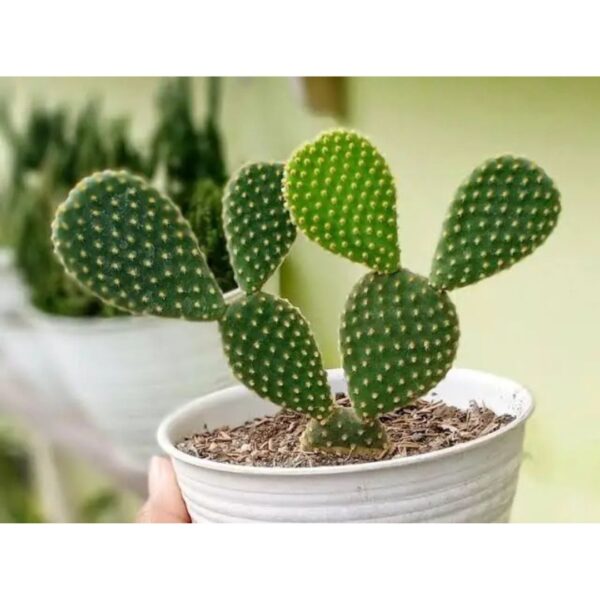
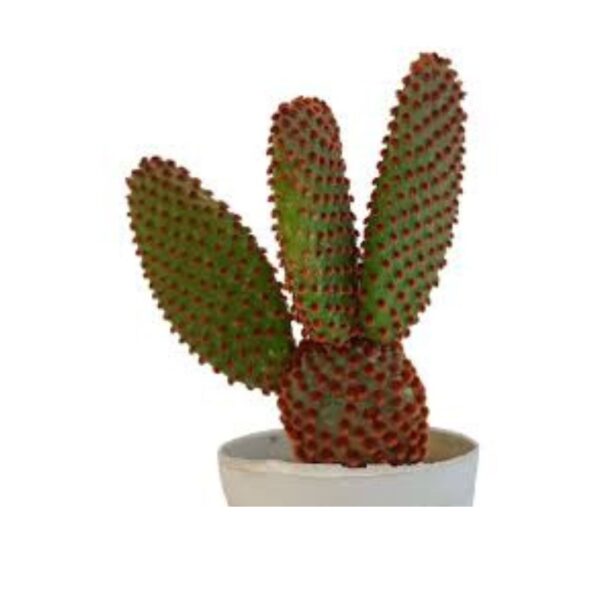
Pads: The cactus features flat, velvety, oval-shaped green pads that usually grow in pairs, which makes them look like a rabbit’s ears.
Glochids: Instead of large, sharp thorns, they have tiny, hair-like barbed bristles called glochids (white or golden-yellow) arranged in polka-dot clusters. These detach easily on touch and can irritate the skin.
Size: It grows slowly, reaching about 2 to 3 feet tall and spreading 3 to 5 feet wide over many years.
Flowers: In spring and summer, mature plants may grow cup-shaped, creamy-yellow flowers followed by small purple-red fruits.
Light: Needs bright, direct sunlight for several hours a day. A south-facing or west-facing window works best indoors.
Water: Water deeply only when the top 1 to 2 inches of soil are completely dry. Reduce watering significantly during winter. Overwatering causes fatal root rot.
Soil: Requires a fast-draining cactus potting mix, often mixed with perlite or coarse sand.
Temperature: Thrives in warm indoor temperatures (70–100°F / 21–38°C), but prefers cooler rest (50–65°F) during winter dormancy.
The Bunny Ear Cactus, scientifically known as Opuntia microdasys, is a popular and charming desert native to central and northern Mexico that features distinctive velvety green pads growing in pairs resembling a rabbit’s ears. Unlike many traditional cacti with large, sharp spines, this low-maintenance houseplant is covered in clusters of tiny, fuzzy, whitish-yellow or brownish bristles called glochids that detach easily upon touch and can cause skin irritation. Requiring minimal care, it thrives best in bright, direct sunlight and well-draining sandy soil, needing water only when the potting mix is completely dry to prevent fatal root rot.
Reviews
There are no reviews yet.
Be the first to review “Bunny Ear Cactus | Plants for The Home Decor | Natural Plant | Plant Look Like a Rabbit’s Ears”Cancel Reply




Reviews
There are no reviews yet.