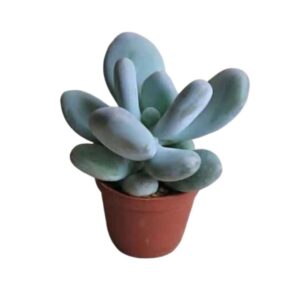
Moonstone Succulent Plant | Natural Indoor Plants | Plants for Indoor living room | Plants for The Home Decor
Product images are for reference only. Actual product details may vary.
Details:
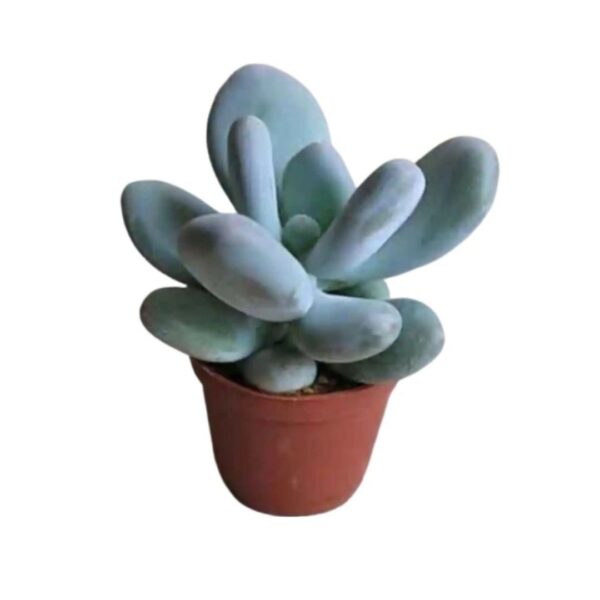
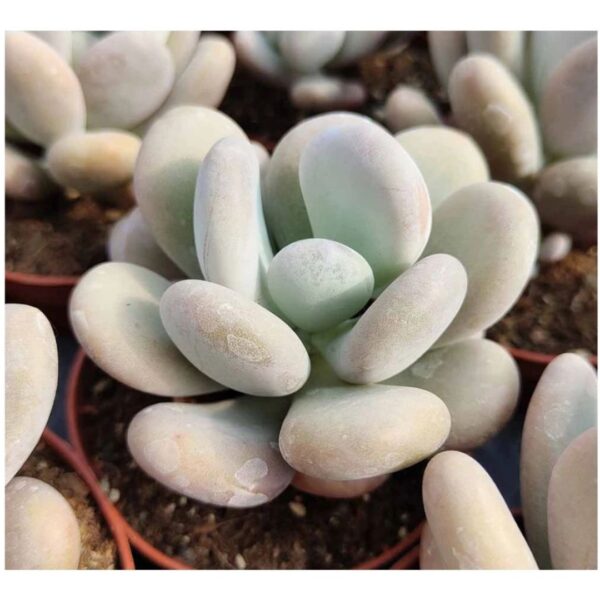
Scientific name: Pachyphytum Oviferum
Eng. Name: Moonstone, Sugar almond plant
Appearance: Plump, oval leaves with a powdery, frosted texture, often appearing pinkish, bluish, or bluish-purple.
Color: They typically have a bluish-green or bluish-purple hue, often with pink or purple edges, especially when exposed to sunlight.
Flower: Small, bell-shaped flowers, often in shades of pink, red, or orange, can appear in spring or summer.
Size: Pachyphytum Oviferum are relatively compact, reaching a height of 4 inches and a spread of 12 or more inches.
Growth Habit: They grow in a prostrate (low-lying) manner, with stems bearing leaves at the tips.
Light Preference: They thrive in bright, indirect sunlight but can tolerate some direct sun.
Care: Relatively easy to care for, requiring bright, indirect light and infrequent watering (Allow the soil to dry completely between waterings).
Propogation: Can be propagated through leaf cuttings or offsets.
Moonstones, also known as Pachyphytum Oviferum. It is an absolutely fantastic alien plant that looks like moonstones. It’s a popular drought-tolerant succulent houseplant that is effortless for newbies.
Pachyphytum oviferum comes from Mexico. Fat, rounded, egglike leaves help this plant withstand the scorching sun. Reaching 4 inches (10 cm) tall and 12 (30 cm) wide,
This plant, which has distinctive and lovely flowers that look gorgeous whether you grow them in your garden or containers, has silvery, plump leaves. Mature specimen flower from February to April after dormancy.
Reviews
There are no reviews yet.
Be the first to review “Moonstone Succulent Plant | Natural Indoor Plants | Plants for Indoor living room | Plants for The Home Decor”Cancel Reply



Reviews
There are no reviews yet.